Minimal quantity lubrication systems
for precise, clean processes
Excessive or uneven lubricant application increases consumption, cleaning requirements, and process risks. In sensitive manufacturing environments, even minimal deviations can lead to tool stress, surface damage, or unstable processes. For this reason, minimum quantity lubrication systems are becoming increasingly important in the industry.
They apply lubricants in a targeted, reproducible, and minimally dosed manner. Only the technically necessary amount is applied – ensuring clean conditions, reduced resource consumption, and cost-effective production.
WERUCON develops tailored solutions for your specific application, medium, and process environment.
We are experts in state-of-the-art, high-precision minimum quantity lubrication.
Please feel free to contact us with any questions regarding minimum quantity lubrication systems.
Table of Contents:
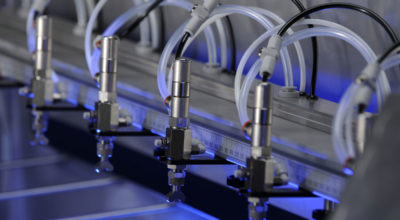
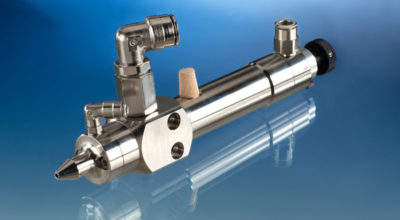
A minimum quantity lubrication (MQL) system delivers minute amounts of lubricant to a specific point of application in a controlled manner. The precise interplay of dosage, timing, pulsing, and application position is crucial—ensuring ideal friction reduction, surface protection, and optimal process reliability.
Unlike methods involving a large excess of media, minimum quantity lubrication systems focus on supplying the process exactly according to demand. The system does not operate on the principle that “more is better,” but rather on technical necessity—only the precise amount required is applied.
It is precisely this precision that makes MQL attractive for modern manufacturing environments: it combines controlled application with high resource efficiency and superior process quality, while minimizing disposal costs and extending tool service life.
As automation increases, so do the demands for precision, repeatability, and cleanliness. At the same time, the aim is to minimize material usage, scrap rates, and downtime. Inadequately optimized lubrication can quickly cause problems: too much lubricant leads to residues, dripping, and the need for cleaning, while too little promotes friction, material adhesion, and tool wear.
Controlled dispensing is crucial, especially for clocked, sensitive, or highly dynamic processes. Minimal quantity lubrication systems make lubricant supply predictable, reduce fluctuations, and thereby increase technical reliability and cost-efficiency.
The lubricant reaches the exact point of application in a controlled manner. This creates stable conditions and ensures maximum repeatability, even in demanding processes.
Only the technically necessary amount of lubricant is used. This noticeably reduces consumption and sustainably optimizes the cost structure.
Less excess means fewer residues on components, tools, and machines. This reduces cleaning requirements and contamination in the immediate process environment.
Targeted lubrication reduces friction and stabilizes critical zones. The result is longer tool life and extended maintenance intervals.
Reproducible application enables precise process monitoring and control. This is a decisive advantage in automated production lines.
Economical use of media saves costs and conserves resources. In this way, minimum quantity lubrication systems support more sustainable manufacturing strategies.
Every manufacturing application places specific demands on dispensing and application. Variations in the lubricant, workpiece geometry, cycle time, or process speed influence how a system must be designed. WERUCON therefore considers not just the application technology itself, but the entire process.
Our systems are designed for maximum precision, seamless integration into existing workflows, and reliable continuous operation. Through flexible adaptation to your specific medium and process environment, we create solutions that are both technically impressive and economically efficient.
WERUCON minimum quantity lubrication systems are ideal for precise, economical, and reliable lubricant application—especially in metalworking or stamping/forming technology, assembly processes, and applications requiring pinpoint dosing.
The systems are optimized for varying component geometries, clocked production lines, and clean surfaces.
Proven fields of application:
For a minimum quantity lubrication system to deliver excellent results during continuous operation, it must be perfectly matched to the process. Key factors include:
Intuitive operation, ease of maintenance, and flexible adaptability to components and process parameters are equally important. A strong manufacturer takes a holistic approach to applications, ensuring long-term process stability and cost-efficiency.
WERUCON combines technical precision with an understanding of industrial practice. In the field of minimum quantity lubrication, our solutions enable you to apply lubricants in a controlled manner, stabilize processes, and use resources efficiently.
For you, this means greater control, reduced consumption, and a clean production environment throughout the entire workflow. Our systems prove their worth—especially in automated, high-performance processes—by delivering maximum reproducibility and minimal lubricant loss.
Minimum quantity lubrication systems are designed to dispense very small, precise amounts of lubricant. They deliver the medium to the specific point of application in a controlled manner, thereby supporting clean, stable, and cost-effective processes.
A minimum quantity lubrication system lowers lubricant consumption, reduces residue, and improves process repeatability. At the same time, it can decrease cleaning requirements, wear, and unnecessary loss of media.
They are suitable for industrial processes requiring the precise, demand-based application of lubricants. These include, among others, metalworking, stamping and forming technology, and assembly applications.
Key factors include high dosing accuracy, suitability for the specific lubricant medium, ease of integration into existing systems, and a design tailored to the actual process.